How to Choose an Orthodontist: A Practical Checklist
Choosing an orthodontist is a one-to-three-year commitment, so it deserves more thought than picking the closest office or the lowest quote. The factors that matter most are credentials, a clear written treatment plan, transparent pricing, and a practice you can realistically get to for regular visits. This checklist walks through what to verify, what to ask, and the warning signs worth noticing before you commit.
Check the credentials
The first thing to understand is that every orthodontist is a dentist, but not every dentist is an orthodontist. An orthodontist completed dental school and then several additional years of specialty residency focused specifically on moving teeth and aligning jaws. That extra training is the foundation of the specialty.
Beyond the basic specialty training, some orthodontists are board certified by the American Board of Orthodontics. Board certification is voluntary and goes beyond the minimum required to practice. It involves an examination of both knowledge and real treated cases, and it must be renewed over time. You can learn what the process involves directly from the American Board of Orthodontics. Certification is not the only marker of a good orthodontist, but it is a verifiable one worth knowing about.
Use the first consultation well
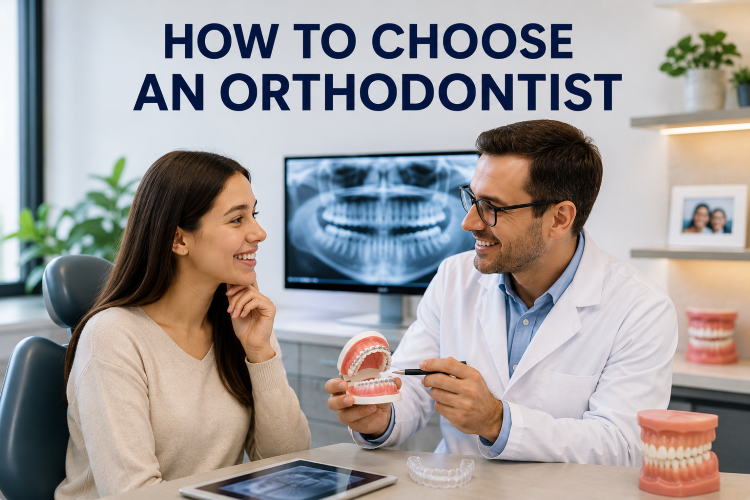
Many orthodontic consultations are free, which makes it entirely reasonable to visit more than one office before deciding. Treat the consultation as your interview of them, not the other way around. A strong consultation includes a genuine examination, a clear explanation of what your case needs and why, an estimate of how long treatment should take, and a written cost breakdown you can take home.
Pay attention to how the conversation feels. A good orthodontist explains options in plain language and gives you space to ask questions. If you leave an office without a clear plan, or feeling rushed, that experience is itself useful information about what working with that practice would be like.
It also helps to bring a little preparation. Jot down your main concerns beforehand, note any questions as they occur to you, and if you are choosing for a child, think about practical matters like appointment times and travel. Visiting two or three offices may sound like a lot, but consultations are usually short, often free, and the contrast between them is exactly what makes the right choice obvious. You learn as much from comparing offices as from any single visit.
Questions worth asking
- Which treatment options suit my case, and why this one over the alternatives?
- How long is treatment expected to take, and what could extend it?
- Exactly what does the quoted fee include, especially X-rays, retainers, and follow-up visits?
- Who will I actually see at each appointment, the orthodontist or an assistant?
- What happens, and what does it cost, if treatment runs longer than planned?
- What payment plans are available, and are they interest-free?
Clear, patient answers are a good sign. Vague or rushed answers, or reluctance to put anything in writing, are worth noting. You are about to spend a long time with this practice, and the quality of communication now is a fair preview of the quality of communication later.
Why ownership is worth knowing
Orthodontic practices are not all structured the same way. Some are independently owned by the orthodontist who treats you. Others are part of larger corporate groups or dental support organizations that may operate many locations. Neither model is automatically better, and excellent care exists in both, but the structure can quietly affect things like how likely you are to see the same provider throughout treatment and how decisions get made.
Our approach: Most directories do not show ownership at all. OrthodontistNearMe labels each practice as privately owned or corporate owned, so you can factor that into your decision rather than guess.
Red flags to watch for
A few warning signs are worth slowing down for. Be wary of a quote that sits far below everyone else’s with no clear explanation of what is or is not included. A treatment plan that is never put in writing is a concern, and so is an office that cannot clearly tell you who is supervising your care.
None of these alone guarantees a problem, and any practice can have an off day. But when several appear together, they are a reasonable signal to keep looking and compare another office before you commit.
Your next step
Make a short list of two or three practices, book consultations, and compare what you learn. The goal is a confident, well-informed choice, not the fastest one.
Search orthodontists near you and filter by board certification and ownership type.
Search orthodontists near me →Are you an orthodontist? Add your practice to the directory →
This article is general information, not medical advice.