How Much Do Braces Cost? A Clear 2026 Price Breakdown
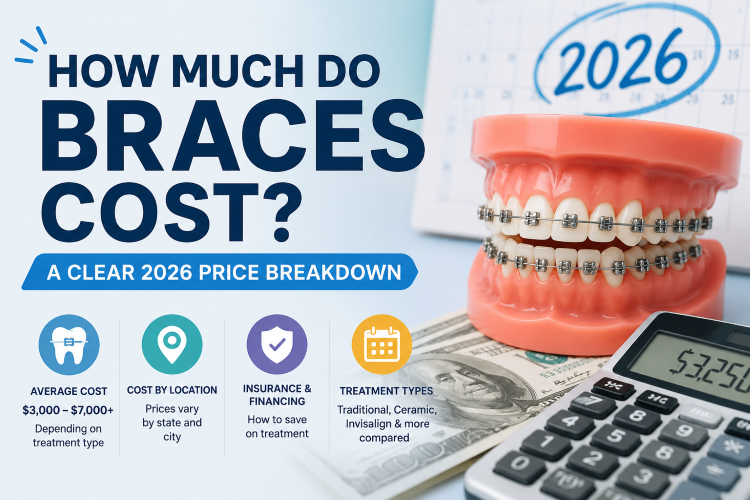
Braces are one of the largest health purchases many families make, and the price swings widely depending on the type of braces, how complex the case is, and where you live. Most patients pay within a broad range rather than one fixed number. The encouraging part is that the final cost is far more controllable than most people expect once you understand what drives it. This guide breaks down the price ranges, the factors that move them, and the concrete steps that lower your out-of-pocket total.
What braces typically cost
Orthodontic treatment is usually quoted as one all-in fee that covers the entire course of care, from the first set of brackets to the final retainer. That single number can look intimidating, but it is rarely an apples-to-apples figure between two offices. Traditional metal braces generally fall in a lower range, while clear aligners and less visible options sit higher. Where you live matters too, since orthodontic fees track the local cost of doing business.
Rather than trust a single advertised number, the most useful thing you can do is ask each office for a written quote that spells out exactly what the fee includes. Two quotes that look similar on the surface can differ once you account for X-rays, retainers, and follow-up visits. A clear written estimate turns a vague “around this much” into something you can actually compare. For current national averages and how orthodontic fees are typically structured, the American Association of Orthodontists publishes patient-facing guidance at aaoinfo.org.
How the type of braces changes the price
The appliance you choose is one of the biggest single factors in the final price. Metal braces are typically the most affordable option and remain the most common choice, especially for younger patients. Ceramic, or tooth-colored, braces cost more because the materials are more expensive and designed to be less visible against the teeth.
Clear aligner systems usually sit at the higher end of the range, reflecting the custom manufacturing involved. Lingual braces, which attach to the back of the teeth so they are hidden from view, are often the most expensive of all because they are more difficult to place and adjust. None of this means the pricier option is the better one for you. The right choice balances budget, appearance, and what your specific case actually requires, and an orthodontist can tell you which options would genuinely work.
What makes the price go up or down
Three things move the price most. The first and largest is case complexity. A mild correction, such as closing a small gap or easing minor crowding, costs far less than a case that involves correcting a significant bite problem, guiding jaw development, or removing teeth to create space. The more the teeth have to move, the more appointments and materials the treatment requires.
The second factor is treatment length, which is closely tied to complexity. A longer treatment means more adjustment visits, and that time is built into the fee. The third is location, because fees follow the local cost of living and rent. This is why comparing more than one practice is so valuable as a money-saving step in its own right.
Worth knowing: Two offices a few miles apart can quote noticeably different numbers for the same treatment. That gap is not a sign that one is overcharging; it simply reflects different overhead and pricing. It is exactly why getting more than one written quote pays off.
How insurance and payment plans help
The headline fee is rarely what a family actually pays out of pocket. Many dental insurance plans include an orthodontic benefit, often structured as a lifetime maximum that applies once per person. That benefit seldom covers the whole cost, but it meaningfully reduces it, and it is worth checking before you assume treatment is out of reach.
Beyond insurance, most orthodontic offices offer in-house monthly payment plans, frequently with little or no interest, so the fee is spread across the treatment period instead of being due upfront. Health savings accounts and flexible spending accounts can also be used, which effectively pays for treatment with pre-tax dollars and lowers the real cost further. Stacking these tools together is how most families make orthodontic care affordable.
Practical ways to spend less
- Get quotes from at least two or three practices and compare what each fee includes, not just the headline number.
- Ask whether the first consultation is free, since many practices offer it at no charge.
- Confirm whether retainers and follow-up visits are included in the quote or billed separately.
- Ask about in-house payment plans and their interest terms before you commit.
- Ask whether a health savings or flexible spending account can be applied.
- Consider whether a slightly less expensive braces type would work just as well for your case.
None of these steps requires special knowledge. They simply require asking clear questions and comparing answers, which is something every patient is entitled to do before committing to a long course of treatment.
Your next step
The single most useful thing you can do is talk to more than one orthodontist and compare written quotes side by side. Comparing a few offices is the most reliable way to land on a fair price for your situation, and it costs nothing but a little time.
Find and compare orthodontists near you, including which practices are board certified and independently owned.
Search orthodontists near me →This article is general information, not medical or financial advice. Costs vary by individual case; always confirm pricing directly with a licensed orthodontist.