
Does Dental Insurance Cover Braces and Invisalign? What to Check First
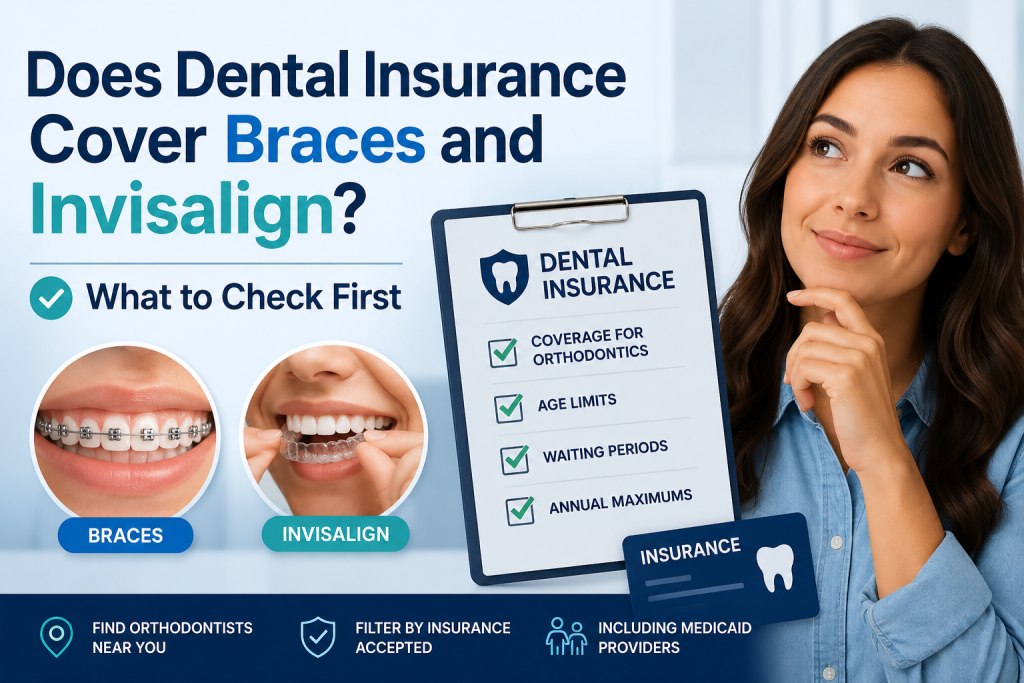
Most dental plans that include orthodontics will help pay for braces and Invisalign, but the help is capped and works differently from your regular dental coverage. One term does most of the work here: the orthodontic lifetime maximum. Once you understand it, you can predict pretty closely what you will actually owe. This guide covers how coverage works, whether Invisalign is treated the same as braces, and the exact questions to ask before you sign anything.
Do dental plans cover orthodontics at all?
Some do and some do not, and that is the first thing to pin down. Orthodontic coverage is usually a separate benefit from the cleanings and fillings side of a dental plan, and plenty of policies leave it out entirely or offer it only as an add-on rider. Employer plans often include it, while many individual marketplace plans exclude orthodontics for adults. So before you compare quotes from offices, confirm that your specific plan has an orthodontic benefit in the first place.
When a plan does cover it, the benefit typically pays a percentage of treatment, commonly around half, up to a fixed dollar ceiling. Coverage is also usually reserved for comprehensive treatment rather than minor cosmetic touch-ups, and some plans draw a line between what they consider medically useful and what they consider elective. None of this is meant to discourage you. It just means the advertised treatment fee and your out-of-pocket cost are two different numbers, and the plan details decide the gap between them.
How the orthodontic lifetime maximum works
This is the single most important number in your policy, and it trips up more families than anything else. The orthodontic benefit is almost always structured as a lifetime maximum, meaning a total dollar amount the plan will ever pay toward orthodontics for that person. It does not reset each year the way your regular dental allowance does. Common lifetime maximums land somewhere in the range of one thousand to three thousand dollars, with many plans clustering around fifteen hundred to two thousand.
Here is how it plays out in practice. Say your plan covers fifty percent of orthodontic treatment with a two thousand dollar lifetime maximum, and your quoted fee is six thousand dollars. Fifty percent of six thousand is three thousand, but the plan stops at its two thousand dollar ceiling, so it pays two thousand and you cover the remaining four thousand. The percentage tells you how fast you reach the cap. The cap tells you where the help stops. Knowing both lets you calculate your real cost before you ever sit in the chair.
Worth knowing: An orthodontic benefit is a lifetime maximum, not a yearly one. Once you use it on a course of treatment, it does not refill next year the way your routine cleanings do. Splitting treatment across calendar years will not unlock more coverage.
Is Invisalign covered the same as braces?
Increasingly, yes. Many modern plans now treat clear aligners like Invisalign the same way they treat traditional braces, applying the same percentage and the same lifetime maximum to either option. That is a real shift from a few years ago, when aligners were more often excluded.
That said, not every plan has caught up. Some still categorize clear aligners as elective or cosmetic and either pay less toward them or exclude them altogether, even while covering metal braces for the same case. Because the wording varies, do not assume. Ask your insurer specifically whether clear aligner treatment is covered at the same level as braces. If the answer is no, that gap may be worth factoring into which treatment you choose, and a good orthodontist can tell you whether braces would work just as well for your case. If you are still weighing systems, our clear aligner comparison breaks down the differences.
Medicaid, CHIP, and coverage for kids
Coverage for children runs on a different track. Medicaid and CHIP are required to cover medically necessary orthodontic treatment for enrollees under twenty-one, but the key phrase is medically necessary. That means the braces have to address a genuine functional or health problem, such as a severe bite issue, rather than mild crowding or purely cosmetic alignment. Cases generally need prior authorization, where an orthodontist documents the severity and the program approves treatment before it starts.
For adults, public coverage is far more limited and is usually available only when treatment ties to a qualifying medical condition. If you are in Texas and want the specifics on eligibility, medical necessity, and finding a provider who accepts it, we cover that in detail in our guide to Medicaid braces coverage in Texas.
What to check before you commit
- The exact lifetime maximum for orthodontics, and confirm it has not already been used.
- The percentage of treatment the plan pays, so you know how fast you reach the cap.
- Whether clear aligners are covered at the same level as traditional braces.
- Any age limits, since some plans only cover dependents under a certain age.
- Whether there is a waiting period before orthodontic benefits kick in.
- In-network versus out-of-network rules, which can change what you owe.
- Whether the office files the insurance claim for you or leaves it to you.
- Whether an HSA or FSA can cover the remainder with pre-tax dollars.
Most orthodontic offices will verify your benefits for free before you commit, and many do it during the first consultation. There is no reason to guess when a quick benefits check turns the whole thing into real numbers.
Your next step
Once you know your lifetime maximum and coverage percentage, the next move is to compare a couple of offices and have each one verify your benefits in writing. Two practices can file the same insurance differently, and comparing written estimates is the surest way to see your true out-of-pocket cost. For more on reading a quote closely, see our breakdown of what braces actually cost.
Find and compare orthodontists near you, including which practices are board certified, independently owned, and which insurance plans they accept.
Search orthodontists near me →This article is general information, not medical, financial, or insurance advice. Coverage varies by plan and state; always confirm your benefits directly with your insurer and treatment details with a licensed orthodontist.