
Does Medicaid Cover Braces in Texas? A Dallas Family’s Guide to Finding a Medicaid Orthodontist
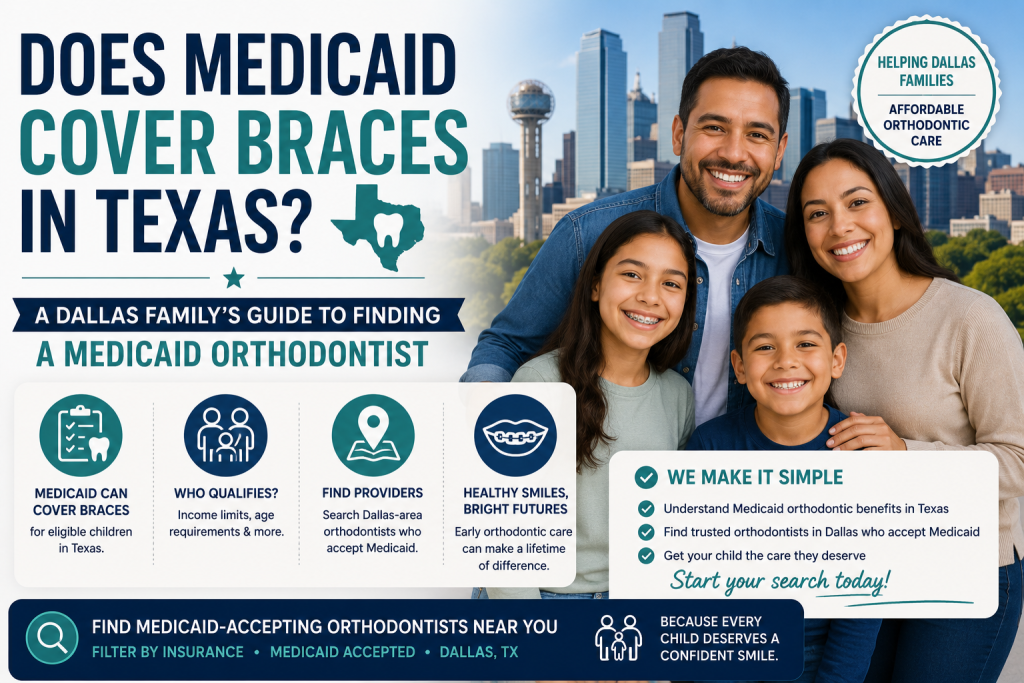
Texas Medicaid can cover braces for children and teens under twenty-one, but only when treatment is medically necessary and approved in advance through prior authorization. It does not cover braces for cosmetic reasons, and adult coverage is very limited. For Dallas families, the path runs through Texas Health Steps: get your child evaluated by a Medicaid orthodontist, who documents the severity and submits for approval. This guide explains what qualifies, how the approval process works, and how to find a Medicaid orthodontist in Dallas.
Does Texas Medicaid cover braces?
Yes, but with real limits. Texas Medicaid and CHIP provide orthodontic coverage for children and teens under twenty-one when the treatment meets strict medical-necessity criteria and is approved before it begins. This coverage comes through the Texas Health Steps program, which is the state’s version of the federal benefit that requires Medicaid to cover medically necessary dental care for young people.
The part that surprises many parents is that qualifying is not automatic and not based on wanting straighter teeth. Braces that are purely cosmetic, or cases of mild crowding, generally will not be approved. The program is designed to cover serious problems that affect a child’s health and function, which means the evaluation an orthodontist does is what actually determines coverage.
What “medically necessary” means
Medical necessity is the whole ballgame here. In practice it means the bite or alignment problem is severe enough to interfere with normal function, such as chewing, speaking, or oral health, rather than being a matter of appearance. Severe malocclusion, significant crowding that prevents proper cleaning, major bite discrepancies, and certain jaw or developmental conditions are the kinds of issues that can meet the standard.
An orthodontist who accepts Medicaid assesses this using an examination and often a scoring system that measures the severity of the case. If the case scores high enough to be considered medically necessary, it can move forward for approval. If it does not, the family can still pursue treatment, but it would be out of pocket or through other financing rather than Medicaid.
Worth knowing: Wanting straighter teeth is not the same as medical necessity. Texas Medicaid covers braces to fix serious functional problems, not for cosmetic alignment. Only an orthodontist’s evaluation can tell you which category your child’s case falls into.
How approval works: Texas Health Steps
The process is prior authorization, which simply means the treatment has to be approved before it starts. It begins with an evaluation by a dentist or orthodontist who accepts Medicaid or CHIP. They examine your child, document the severity of the problem, and submit the case with the required records for review. Medicaid then decides whether the case meets the medical-necessity standard and, if so, authorizes treatment.
Two things are worth keeping in mind. First, starting treatment before approval risks it not being covered, so let the orthodontist complete the authorization step. Second, if a case is initially denied, that is not always the end of the road, since records can sometimes be resubmitted or appealed. A provider experienced with Texas Medicaid will know how to handle both.
What about adults?
For adults, Texas Medicaid orthodontic coverage is very limited. The medically necessary orthodontic benefit is built around enrollees under twenty-one, so most adults will not have braces covered through Medicaid except in narrow circumstances tied to a qualifying medical or surgical condition. If you are an adult hoping to straighten your teeth, it is more realistic to plan around insurance orthodontic benefits, in-house payment plans, or other financing.
If cost is your main concern as an adult, our guides on how dental insurance covers braces and what braces cost in Dallas-Fort Worth lay out the practical options.
Finding a Medicaid orthodontist in Dallas
Not every orthodontist accepts Medicaid, so this is the step that matters most for Dallas families. You want a practice that both takes Medicaid or CHIP and is experienced with the Texas Health Steps authorization process, since that experience often makes the difference in getting a valid case approved smoothly.
- Confirm the office currently accepts Texas Medicaid or CHIP for orthodontics, not just for general dentistry.
- Ask whether they handle the prior-authorization paperwork through Texas Health Steps for you.
- Ask how they evaluate medical necessity, and what happens if a case is not approved.
- Check whether the initial Medicaid evaluation is offered at no cost.
- Ask whether the practice is board certified and whether it is independently owned.
- If your child is not yet approved, ask about payment options in case Medicaid declines the case.
You can also verify eligibility and benefits directly through the Texas Health and Human Services website, then use that information when you call offices.
Your next step
The first real move is an evaluation with a Dallas orthodontist who accepts Medicaid, since only an exam can tell you whether your child’s case qualifies. It is reasonable to check more than one office, especially since acceptance and experience with the approval process vary.
Find and compare orthodontists in the Dallas area, including which practices are board certified, independently owned, and which accept Medicaid.
Search orthodontists near me →This article is general information, not medical, dental, or legal advice. Medicaid rules and eligibility change and vary by case; always confirm current coverage with Texas Health and Human Services and a licensed orthodontist.