CoTreatMe Wants Your Dentist Doing Braces. We Went Looking for Who Built It
★ The short version
- CoTreatMe is a platform where your general dentist delivers orthodontic treatment in their own office while an orthodontist plans and oversees it remotely.
- The website names nobody. No about page, no team page, no founders. We went looking through trademark filings and Texas corporate records.
- The company’s professional corporation lists three directors: Dr. Scott Law, a co-founder of Smile Doctors, the largest orthodontic support organization in the country; Dr. Joshua Adcox, Smile Doctors’ Clinical Director of Remote Care; and Timothy Gates, an IT executive.
- The site says “designed by orthodontists.” That is true. It does not say which ones.
- We have open questions about who is legally the treating doctor, who answers if a case goes wrong, and how money moves without becoming a referral fee. We would publish their answers.
The pitch takes about eleven seconds to understand, which is what makes it interesting.
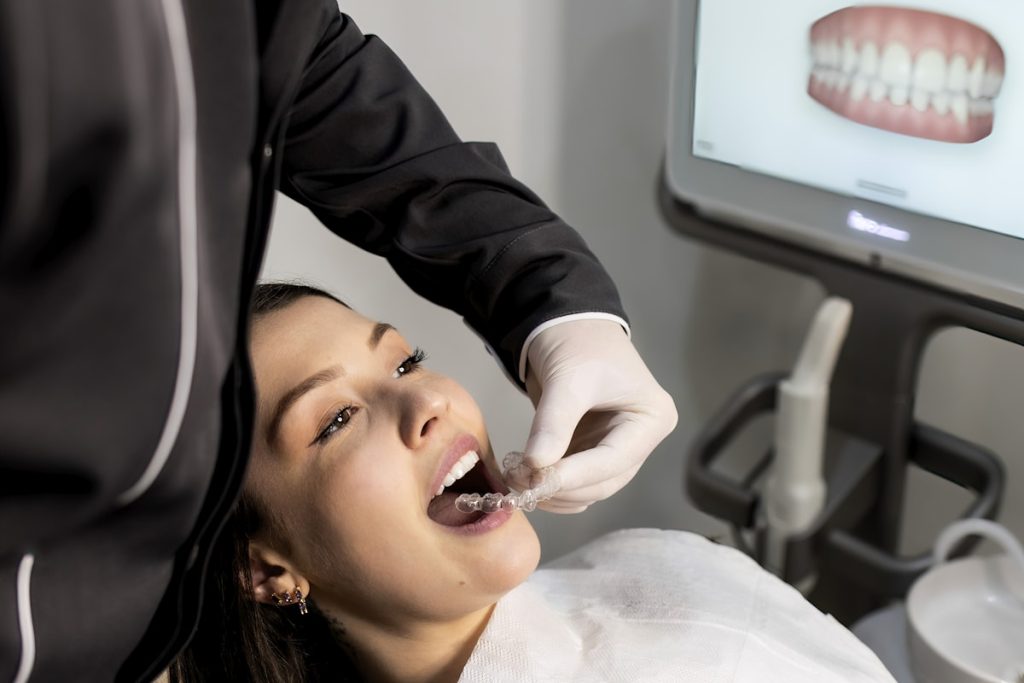
Your general dentist already has the patient in the chair. They already own a scanner. What they do not have is an orthodontist. So a company comes along and says: keep the patient, we will bolt an orthodontist onto the back of your operation remotely, the GP does the visits, the orthodontist does the planning, everybody gets paid.
That company is CoTreatMe. It exhibited at the American Association of Orthodontists annual session in Orlando this May, booth 1657, one of 338 companies on the floor. It is small, roughly two to ten employees by its own LinkedIn listing. And it is worth paying attention to, because it is a clean expression of the single biggest unresolved argument in orthodontics right now: who is allowed to move teeth, and who has to be in the room while it happens.
What the product actually is
In their words, CoTreatMe does three things: bidirectional referrals between general dentists and specialists, reimbursement flows between them, and co-treatment of cases. It is live for general dentists and orthodontists, with oral surgeons, periodontists and endodontists listed as coming soon. It integrates with OrthoFi, DentalMonitoring, Align, Angel Aligner, Spark and standard calendars.
The interesting part is the two sales pitches, which sit side by side on the homepage.
| To orthodontists | To general dentists |
|---|---|
| “Partner with local GPs to help more patients without opening new locations.” “CoTreat instead of compete.” “Earn up to $1,500+ per case with zero added chair time or clinic expansion costs.” | “Add a new revenue stream without the risk and complexity of doing cases solo.” “Deliver specialist-quality orthodontics with orthodontist oversight.” “Earn reimbursement for clinical record services.” |
Read those together and the model is clear. The GP keeps the case and does the chair work. The orthodontist never sees the office, and collects a per-case fee for the thinking. A third plank on the same page addresses the obvious objection head on, under the heading “No Fee-Splitting”: “Payments are structured for services rendered, not referrals. Every transaction reflects real clinical work delivered.”
Give them credit for that. Most companies in this space hope nobody asks.
Nobody’s name is on it
Here is what sent us digging. CoTreatMe’s website has no about page, no team page, and no named human being anywhere on it. Not a founder, not a chief executive, not a clinical advisor. The only legal document on the site is a privacy policy, and the only reason we know a company name at all is that the policy opens with one: CoTreatMe, LLC.
That is unusual for any startup. It is more unusual for one whose core marketing claim is trust us, this is compliant, and orthodontists designed it. Designed by which orthodontists?
The trail is public and it takes about twenty minutes.
Start with the trademark. There are two live applications for COTREATME at the US Patent and Trademark Office, filed in April 2025 and May 2026. Both are owned by an entity called Dental Ortho Connect LLC. The first one names an individual co-applicant: Timothy Gates.
Now go to Texas corporate filings. Two entities come up.
| Entity | What the filing says |
|---|---|
| Cotreatme - Scott Law Ortho Corp, PC | Texas professional corporation, file number 0806145738, filed July 29, 2025, in existence. Directors listed: Joshua Adcox, Scott Law, Timothy Gates. Principal address is a commercial registered agent suite in Austin. |
| Cotreatme - North America LLC | Texas LLC, file number 0806358917, filed December 23, 2025, in existence. Sole principal and managing member listed as “Remoteortho SAS.” Same Austin address. |
So there are at least four related entities: a professional corporation, an LLC, the trademark holder, and the LLC named in the privacy policy. And three names.
Who they are
Dr. Scott Law, DMD. Harker Heights, Texas. Trained at Jacksonville University. In 2015 he co-founded Smile Doctors with Dr. Dana Fender and Dr. Greg Goggans. Smile Doctors is now the largest orthodontics-focused support organization in the United States, more than 550 locations across 36 states. His LinkedIn headline currently reads “Co-Founder/CCO at SmileDoctors.”
Dr. Joshua Adcox, DDS. Board-certified orthodontist, dental degree from USC, orthodontic certificate from Vanderbilt. He is Clinical Director of Remote Care at Smile Doctors and runs a separate venture called The Remote Orthodontist, which teaches practices to build digital-first, remote-monitored workflows.
Timothy Gates. Kingsland, Texas. A chief information officer and IT executive, and the individual named alongside Dental Ortho Connect LLC on the first trademark application.
Two of the three people listed as directors of CoTreatMe’s professional corporation are Smile Doctors leadership, including a co-founder. Neither Smile Doctors’ site, nor Dr. Law’s personal site, nor Dr. Adcox’s site mentions CoTreatMe. And CoTreatMe’s site mentions none of them.
To be completely clear about what this is and is not: there is nothing improper about orthodontists building software. Adcox’s remote-care background is arguably the single most relevant résumé in the country for this specific product. If you were going to build a remote co-treatment platform, these are plausibly the people you would want building it.
The problem is the omission. A large share of the orthodontists being sold this platform are independent practitioners, and many of them are independent on purpose, having turned down offers from organizations like Smile Doctors. Whether the people behind a co-treatment platform are OSO leadership is exactly the kind of thing those buyers would want to weigh. Leaving it off an otherwise polished website, while running a “trust our compliance” frame, creates a suspicion the founders have not earned and do not need.
Publish the about page. The résumés are good.
Five questions we cannot answer from the outside
What follows are questions, not accusations. We found no evidence of wrongdoing by CoTreatMe or by anyone named here, and we are not alleging any. A real contract could answer every one of these well. We just have not seen one, and neither has anybody else, because there is no published pricing, no published agreement, and no published legal opinion.
1. Does this keep orthodontics with specialists, or does it teach general dentists to replace them?
CoTreatMe’s own tagline for orthodontists is “CoTreat instead of compete.” That framing assumes the competition is already happening, and honestly, it is. General dentists have been doing aligner cases without any orthodontist involved for years. Measured against that baseline, a model that puts a board-certified orthodontist into the treatment planning of a case that would otherwise be done solo is a clinical improvement.
Measured against a different baseline, it looks like something else. In the traditional relationship, the GP identifies the problem and refers the patient out to a specialist who spent two to three additional years training specifically to move teeth. In this model, the case stays in the GP’s office, the GP builds an orthodontic service line, and the orthodontist is compensated for the intellectual property.
The open question: in five years, does this model result in more cases touched by an orthodontist, or does it normalize orthodontics as something a general dentist does with a subscription? Those are very different futures, and the honest answer is that nobody knows yet, including the founders.
2. What does it actually do to the general dentist?
The upside is real and it is not small. A GP gets a new service line without buying an office, without hiring an orthodontist, and with a specialist’s name attached to the treatment plan. For a rural practice two hours from the nearest orthodontist, that is a genuine access win for patients who currently get nothing.
The questions run the other way too. If the GP is delivering orthodontic care, the GP is on the hook for delivering orthodontic care. Does the GP’s malpractice carrier know? What happens when a case needs something outside the aligner envelope, an extraction decision, a skeletal problem, an impacted canine? Who decides the case is beyond scope, and what does the GP do with a patient who is already eighteen months and several thousand dollars in?
3. Who is the treating doctor, and who answers if something goes wrong?
This is the question we would want answered in writing before signing anything, from either side.
If a patient’s teeth do not move as planned, or a root resorbs, or a bite finishes worse than it started, who is responsible? The general dentist, who did every appointment and touched the patient? Or the orthodontist, who wrote the plan and may never have been in the same building?
Downstream of that sit questions the marketing page does not address:
- Whose name is on the treatment plan and the informed consent?
- Does the orthodontist examine the patient in person at any point? Many state boards require the diagnosing dentist to have examined the patient, and teledentistry supervision rules vary a great deal state to state.
- Does the patient know the orthodontist exists? Does the patient know they may never meet them?
- Who owns the clinical records, and who finishes the patients if the platform shuts down or either doctor leaves?
Patients accept remote monitoring readily when a specialist they have met is watching the scans. “Your dentist is doing your braces and an orthodontist you will never meet is checking the photos” is a materially different disclosure, and it ought to be made out loud.
4. How is the money handled, and how is that not fee splitting?
Fee splitting is not a technicality in dentistry. It is a specific prohibition. The American Dental Association’s Code of Ethics, Section 4.E states plainly that dentists shall not accept or tender rebates or split fees, and the accompanying advisory opinion extends that to arrangements with third parties, not just between dentists. Most states have their own statutes, and where federal program money such as Medicaid is involved, the federal Anti-Kickback Statute is in play as well.
CoTreatMe’s answer is three sentences on the homepage: payments are for services rendered rather than referrals, an independent third party manages the funds, and the platform was designed by orthodontists.
The first of those is the correct legal test. The question is whether the money behaves that way in practice, and two things on the same page make that hard to assess from the outside.
The first is the promise that payments flow only once collections are secured and care is delivered. A fee paid for a service does not usually depend on whether the case closes. If a general dentist captures a full records set and the patient then decides not to start treatment, is the dentist still paid? That single yes-or-no answer tells you a great deal about what the payment is compensating.
The second is the number itself: “up to $1,500+ per case.” Per case, rather than per service. Under the federal safe harbor for personal services arrangements at 42 C.F.R. § 1001.952(d), compensation has to be consistent with fair market value and not determined in a way that takes into account the volume or value of referrals between the parties. Safe harbors are voluntary and falling outside one is not itself unlawful, but any arrangement priced per case invites the question of what the price is actually for.
On the third-party fund flow: independent handling of money is genuinely useful for creating an auditable record, and auditability matters if intent is ever questioned. It is worth saying clearly, though, that adding an intermediary is an accounting arrangement rather than a legal conclusion.
What would settle it: a published fee schedule showing a fixed, non-contingent payment for a defined service, a fair market value analysis backing that number, and a legal opinion from named healthcare regulatory counsel covering the states where the platform operates. None of that is on the site today. All of it is normal to ask for.
5. Which entity is a practice actually contracting with?
The split between a professional corporation and an LLC is the standard architecture in dental support organizations, and it exists for a legitimate reason: most states require that a dental practice be owned by a licensed dentist, so the clinical entity is held by a dentist and the business entity sits beside it.
That architecture is also exactly what regulators have started examining. Colorado’s new dental board rule, effective January 1, 2027, treats an entity as a “proprietor,” and therefore as practicing dentistry, if it employs the licensed clinicians, owns the office, or owns the equipment. Any practice signing a co-treatment agreement should know which entity holds the contract, which one employs whom, and who owns the patient records.
The Texas filing for the LLC lists its managing member as “Remoteortho SAS.” SAS is a French corporate form. We could not verify that entity in any registry we could reach, which is not evidence of anything at all, but it is a reasonable thing for a prospective partner to ask about.
What CoTreatMe gets right, said plainly. The problem they are attacking is real: referrals genuinely do get lost, GP and specialist communication is genuinely bad, and general dentists are genuinely already doing orthodontic cases with no specialist anywhere near them. Paying fair market value for actual clinical work is legitimate and always has been. A fixed, non-contingent records fee, set in advance, in writing, paid whether or not the patient starts, is a defensible structure. Nothing about this model is doomed. The gap is between what a defensible structure looks like and what a marketing page currently describes.
An open invitation
We would rather print answers than questions. If anyone at CoTreatMe wants to respond to any of the above, on the record, we will publish it in full and update this piece. The same goes for corrections: if any fact here is wrong, tell us and we will fix it.
Every factual claim above comes from CoTreatMe’s own website, from United States trademark filings, from Texas Secretary of State corporate records, or from the public professional profiles of the people named. We found no evidence that CoTreatMe or anyone associated with it has violated any law or regulation, and nothing here should be read as suggesting otherwise. This is a patient-facing directory, not a law firm, and none of this is legal advice.
The reason we wrote it anyway is simple. Our whole premise is that patients deserve to know who owns and who is running the practice treating them. A model in which your dentist does the treatment and a specialist you never meet does the thinking is precisely the sort of arrangement that premise exists to surface.
Know who is actually treating you
Search by city and filter by ownership, board certification and the treatments you need. No account required.
Sources. Company materials: cotreatme.com and its privacy policy. Trademark filings: COTREATME, serial 99141599 and serial 99811370. Texas Secretary of State corporate records as indexed publicly: Cotreatme - Scott Law Ortho Corp, PC, file 0806145738 and Cotreatme - North America LLC, file 0806358917. Exhibitor status confirmed in the official AAO Annual Meeting 2026 exhibitor list (May 1-3, 2026, Orlando), which shows CoTreatMe at booth 1657. Professional backgrounds: Smile Doctors, The Remote Orthodontist, and the subjects’ own LinkedIn profiles. Regulatory framework: ADA Principles of Ethics and Code of Professional Conduct and 42 C.F.R. § 1001.952. Accurate as of August 2026.