Colorado Says a Dental Company Cannot Own Your Orthodontist. What Patients Should Know
★ The short version
- Starting January 1, 2027, Colorado becomes the strictest state in the country about what a dental support organization is allowed to own.
- Under the new Dental Board rule, a DSO cannot be the proprietor of a practice. It cannot employ the dentists, hold the office lease, or own the chairs and the imaging equipment.
- The licensed dentist or orthodontist has to own those things. Practices across Colorado are restructuring right now to comply.
- The DSO industry’s trade group sued in July 2026 to throw the rule out. That case is pending, so this is not fully settled.
- For patients, almost nothing changes inside the treatment room on day one. What changes is who is legally accountable for the office you are sitting in.
Walk into an orthodontic office in Denver in February 2027 and it will look exactly like it did the previous fall. Same front desk. Same doctor. Same chair, same scanner, same wall of retainer cases.
The difference will be on paperwork nobody hands you. As of January 1, 2027, the management company behind that office is not legally allowed to own that chair.
That sounds like an accounting detail. It is not. It is the most aggressive move any state has made in years against the way corporate dentistry is actually structured, and it happened without a single new law being passed.
What Colorado actually did
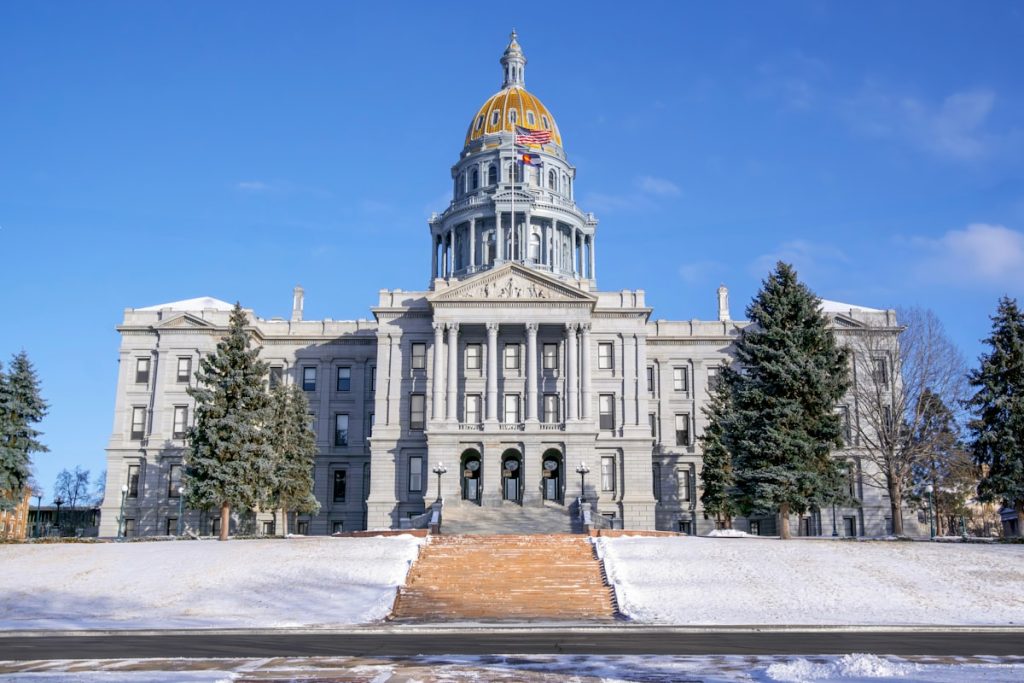
In May 2025, Colorado’s governor signed Senate Bill 25-194, the routine sunset bill that renewed the state’s Dental Practice Act. Routine bills like this get renewed every several years. Nobody outside the industry noticed.
Then the Colorado Dental Board sat down to write the rules that implement it, published in the state’s administrative code at 3 CCR 709-1. The board went considerably further than the bill did. The rule that came out of that process, Rule 1.7, takes a definition that had been sitting quietly in Colorado statute and gives it teeth.
The definition is “proprietor.” Colorado law treats a practice’s proprietor as someone practicing dentistry, and practicing dentistry requires a license. The board’s rule spells out what proprietor means in a way that most DSO arrangements simply do not survive: an entity that employs the licensed clinicians, or owns the dental office, or owns the equipment used to deliver care is a proprietor.
Here is the part that matters. Under the old reading, a support organization could employ the staff, sign the master lease, own every piece of equipment in the building, and still say it was not “practicing dentistry” because a dentist held the shell entity and made the clinical calls. Colorado just closed that door.
The four lines that get drawn on January 1
| What changes | What it means in practice |
|---|---|
| Ownership | Only a licensed dentist may own a dental practice, with narrow exceptions for nonprofits and government entities. Dental hygiene practices may be owned by dentists or hygienists. |
| Employment | Dentists, hygienists and dental therapists must be employed by the practice, not by the support organization. Clinicians move onto the practice payroll. |
| The lease | The practice signs its own lease for the space. The near universal arrangement where a DSO holds a master lease and subleases back to the practice is out. A pure landlord who simply rents out a building is not a proprietor. |
| The equipment | Chairs, delivery units, imaging and clinical materials must sit on the practice’s balance sheet, not the DSO’s. |
Two more requirements run alongside those. A support organization may not influence a licensee’s professional judgment or clinical decisions, and the dentist has to keep immediate access to patient records plus final authority to review and correct a patient’s billing.
The enforcement teeth are pointed at the dentist, not the company. A licensed dentist who practices inside a noncompliant DSO arrangement can be personally disciplined by the board. That is the design choice that changes behavior. A company headquartered in another state can absorb a fight with a Colorado regulator. An individual orthodontist with one license and a mortgage cannot.
What does not change
This is not a ban on DSOs, and any headline that says otherwise is selling something. A support organization in Colorado can still handle marketing, human resources, procurement, IT, revenue cycle and billing systems, accounting, scheduling software, real estate scouting, lender relationships and back office administration.
Which is most of what a DSO does. The economic pitch was never that a management company wanted to own dental chairs for the joy of it. The pitch was that running the unglamorous half of a practice at scale is cheaper than every doctor doing it alone. That pitch survives January 1 intact.
What does not survive is the specific legal architecture: the master lease, the equipment on the DSO’s books, the clinicians on the DSO’s payroll. Rebuilding that is expensive and slow. Equipment has to be transferred at defensible fair market value. Leases have to be renegotiated with landlords who did not ask for this. Payroll has to be restructured for every licensed clinician in the state.
The industry is fighting it, and their argument is not frivolous
At the end of July 2026, the Association of Dental Support Organizations filed a challenge to Rule 1.7 in the Colorado Court of Appeals, asking the court to set the rule changes aside.
Their core argument is procedural, and it is the strongest card they hold: SB 25-194 never mentioned dental support organizations at all. The legislature renewed the Dental Practice Act and said nothing about DSOs. The board then wrote a rule that reorganizes an entire industry. ADSO says that is a regulator legislating, and its chief executive, Andrew Smith, said the board “overstepped its authority” in the rulemaking.
They also argue the rule creates unbounded records disclosure obligations, with no notice requirement and no cap on how often the board can demand financial and business records.
And they make an access argument that deserves to be taken seriously rather than waved off. ADSO points to Medicaid participation: it says DSO-supported practices accept Medicaid at a meaningfully higher rate than solo practices, 53 percent against 40 percent. If restructuring pushes group practices out of Colorado, the people who lose access first are not the ones shopping for clear aligners in Cherry Creek.
The counterargument, which the board did not make publicly but which sits underneath the rule, is that participation rates measure where corporate practices choose to operate, not what the ownership structure causes. Colorado’s regulators declined to comment on the lawsuit. As of this writing the rule is still scheduled to take effect on January 1, 2027, and practices are being advised to comply on that assumption rather than bet on the appeal.
Why this matters far outside Colorado
Colorado is not acting alone, and 2026 has been the busiest year on record for this fight.
In the last eighteen months:
- California put two laws in force on January 1, 2026. SB 351 bars investor entities from interfering with clinical judgment, referrals, patient volume, coding and clinical hiring. AB 1415 requires advance notice to the state before covered healthcare deals close.
- Washington expanded its transaction notice rule in March 2026 to capture changes of control, asset transfers and sale leasebacks, with a standstill period for the attorney general.
- Kentucky passed an emergency dental specific measure in April 2026 barring unlicensed entities from controlling clinical decisions, while grandfathering existing arrangements.
- Oregon set the outer marker in 2025 with SB 951, the toughest corporate practice of medicine law in the country, aimed at management service organizations on the medical side.
- North Carolina went the other direction in July 2026, eliminating an advance board review requirement for dental management arrangements. Not every state is tightening.
Layered on top, the Independent Dental Practice Act, a model bill released in December 2025 by the American Economic Liberties Project, gives any state legislature a ready made template for going after DSO workarounds. Model bills are how a one state policy becomes a fifteen state policy.
What makes Colorado the one the industry is actually frightened of is the mechanism. California and Washington passed statutes, which takes a legislature, lobbying, hearings and years. Colorado did this through a licensing board writing a rule. Every state has a dental board. If a board can reinterpret an existing definition of “proprietor” and reorganize an industry without a new statute, then the industry’s lobbying strategy of the past two decades just got a lot less useful. That is the precedent, and it is why the appeal is being funded so aggressively.
What patients should actually take from this
1. Your appointment is not going to change
Be skeptical of anyone who tells you otherwise, in either direction. Nobody is losing their orthodontist on January 1. This is a rule about entity structure, leases and payroll. The clinical work, the treatment plan and the person doing your adjustments are outside its scope.
2. Ownership was worth knowing about before Colorado made it news
The reason a state board picked this fight is that consolidation happened quietly and fast. Roughly one in eight American dentists is now affiliated with a DSO, and among dentists in their first years of practice it is closer to one in four. Most patients have no idea whether the office on the corner is independent, and there is usually nothing on the door to tell them. That is what our ownership filters exist to fix.
3. Corporate affiliated does not mean bad, and independent does not mean good
This is the part that gets flattened in every argument about DSOs. Some group practices are excellent, run by orthodontists who chose the model deliberately and kept clinical control. Some solo offices are coasting. We wrote a long, unflattering look at the economics in Braces, Inc., and the honest conclusion there was the same: the structure tells you what pressures exist, not what care you will get. It is one input, not a verdict.
4. The signal that actually matters in orthodontics is continuity
Orthodontic treatment runs eighteen to thirty months. Unlike a filling, it is a relationship, and the risk that shows up in patient complaints is not corporate ownership as such. It is handoffs. A doctor who starts your case, an associate who leaves, a rotating schedule where you see someone different every visit, and a finish that nobody feels ownership of. That risk exists in a busy solo office too. Ask about it either way.
5. If you are a patient in Colorado, expect paperwork churn
Through late 2026 you may see new entity names on consent forms, new payee names on statements, or a notice that your practice has reorganized. In this specific window that is compliance, not distress. It is not by itself a red flag. It becomes worth asking about if your treating doctor changes at the same time.
Five questions worth asking at your consultation
- Who owns this practice, and is the orthodontist treating me one of the owners? There is no wrong answer. There is a wrong reaction to the question.
- Will the same orthodontist see me at every visit from start to finish? If not, ask who covers and how the plan is handed over.
- If my orthodontist leaves mid treatment, what happens to my plan and my remaining balance? Ask for it in writing before you pay anything.
- Is the doctor board certified by the American Board of Orthodontics? Certification is voluntary, ongoing and independent of who owns the building.
- Who decides how long my appointments are and how many patients are scheduled at once? This is where business pressure shows up in the chair, whatever the ownership structure.
If you want more on reading the signs yourself, we walked through them in Is your “local” orthodontist actually owned by a corporation? and in our breakdown of what corporate owned and investor partnered actually mean.
What happens next
Three things are worth watching. Whether the Colorado Court of Appeals sets Rule 1.7 aside, narrows it, or lets it stand. Whether Colorado’s legislature steps in during the 2027 session to either codify the board’s position or overrule it. And whether another state dental board, watching all of this, decides it can do the same thing with the definition already sitting in its own statute books.
That third one is the real story. Colorado did not invent a new principle here. Almost every state already says that only licensed dentists may practice dentistry and own dental practices. Colorado just decided to read its own words literally. Any board could.
Know who owns your orthodontist before you sign
Search by city and filter by ownership, board certification and the treatments you need. No account required.
A note on what this is: a plain language explainer for patients, not legal advice. Practices, dentists and support organizations evaluating their own compliance should talk to a Colorado healthcare attorney. Rule language and effective dates are current as of August 2026 and the appeal is pending.
Sources: Colorado SB 25-194 and the Dental Board’s rules at 3 CCR 709-1 (Colorado Division of Professions and Occupations); Dykema; Becker’s Dental Review; Group Dentistry Now; American Economic Liberties Project; ADA Health Policy Institute DSO affiliation data.